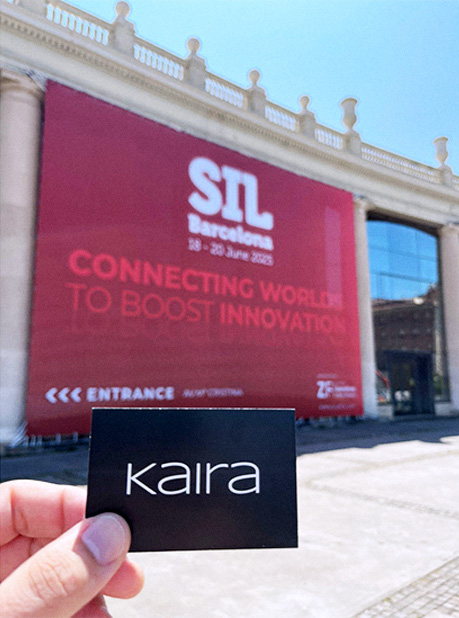
Innovation, AI and action: SIL Barcelona 2025 and Kaira Digital’s vision

Last week, we had the privilege of attending SIL Barcelona, the leading event for logistics, transport and supply chain professionals. Once again, SIL has confirmed why it is the must-attend event for the sector: more than 14,000 attendees, 650 companies from 93 countries, presentations of 163 exclusive innovations and a clear focus on digital transformation and artificial intelligence as drivers of change.

Using AI to optimise routes and reduce emissions
SIL 2025 has been marked by the definitive emergence of artificial intelligence in logistics. Among the most striking innovations presented were intelligent co-pilots for transporters, fleets of autonomous vehicles, drones for the last mile, virtual reality applied to training, and solutions for measuring and reducing carbon footprints. All this without losing sight of sustainability, the digitisation of the supply chain and the importance of public-private collaboration in moving towards more efficient, resilient and connected logistics.
One of the most visited areas was the Digital Supply Chain, where visitors could see in real time how technology enables synchronised and transparent planning, sourcing, production and delivery, thanks to data integration and intelligent automation.
From prediction to action: the round table with our CEO
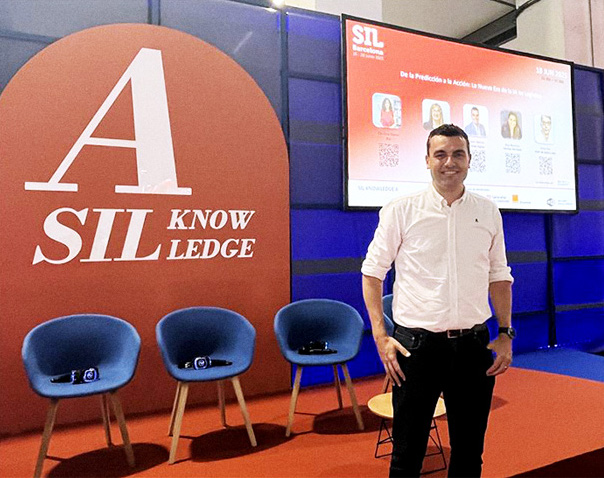
But if there was one moment that was particularly relevant for us at Kaira Digital, it was the round table discussion “From prediction to action: the new era of AI in logistics”, in which our CEO, Javier Beltrán, participated alongside industry leaders such as Elisabet Alsina Fletas (SEAT S.A.), Elisa Martínez Benito (Trivière Partners) and Carles Rúa Costa (Port de Barcelona), moderated by Carolina Cipres (Zaragoza Logistics Center).
The debate revolved around a fundamental issue: though AI has been with us for years, its normalisation in the industry still represents a challenge. Now that AI is part of our personal daily lives, many companies want to implement it in their logistics processes… but often without being clear about why they really need it. This is where technology and supply chain experts play a key role: helping companies identify real problems and apply AI strategically, not just because it is fashionable or due to competitive pressure.

Javier Beltrán shared Kaira Digital’s vision, based on integrating all supply chain data into a single platform, allowing not only visualisation but also real-time conversations with the supply chain thanks to generative and conversational AI. This ability to accompany customers throughout the supply chain, adapting to their operations and anticipating incidents through machine learning, is what marks the difference between simple prediction and true transformative action in today’s logistics.
Agile, human adoption of technology
Another highlight was the need to facilitate the adoption of new technologies in companies. Innovation needs to be accessible, intuitive and accompanied by a cultural change that encourages collaboration and continuous learning. Only then will digitisation and AI cease to be a challenge and become a real competitive advantage.
As SIL President Pere Navarro pointed out, “these innovations don’t just improve the optimisation of logistics processes and the sustainability of operations, they also set new standards for the future of logistics 4.0”.
Conclusion: the future is now
SIL 2025 has made it clear that the future of logistics lies in the intelligent integration of AI, the total digitisation of the supply chain and sustainability as a cross-cutting theme. At Kaira Digital, we remain committed to a platform that not only predicts, but also accompanies and transforms our clients’ operations, helping to turn uncertainty into opportunities for improvement and growth.
Logistics is entering a new era. And we, as professionals and passionate innovators, have a responsibility to lead this change, from prediction… to action.