Three Days at Advanced Factories: From Chasing Data to Making Decisions
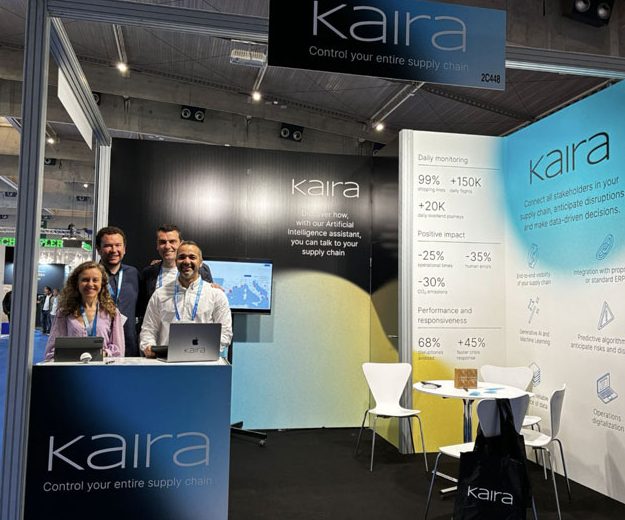
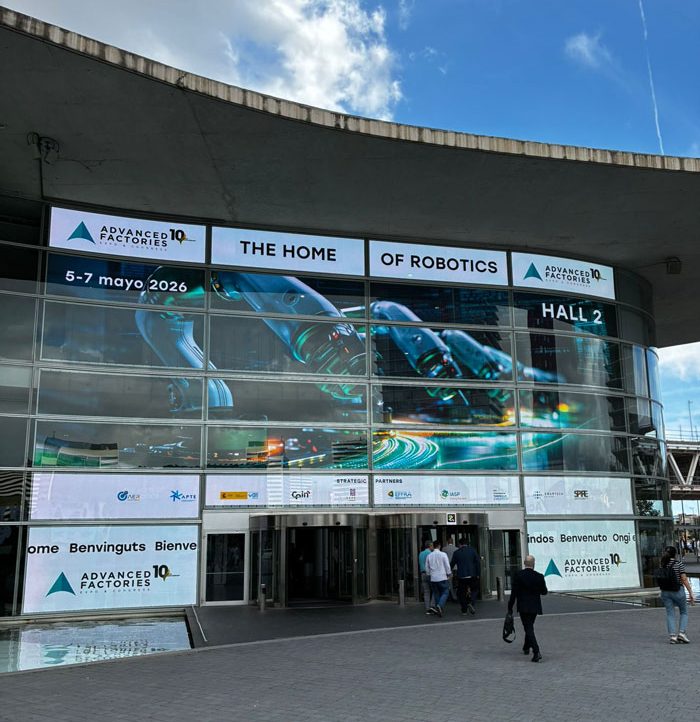
Last week, we had the opportunity to participate in Advanced Factories 2026 in Barcelona, the leading meeting point for advanced industry and automation in Southern Europe.
For three days, Barcelona once again became the epicenter of industrial transformation, bringing together thousands of professionals around a shared challenge: how to build more resilient, more connected supply chains that can react — or even anticipate — an increasingly complex environment.
At Kaira Digital, we attended with our own stand, engaging in conversations with operations, planning, and supply chain leaders who, despite coming from very different industries, all shared a common feeling: the problem is no longer the lack of information.
The problem is knowing what to do with it.
A Trade Fair Defined by AI Applied to Industry
This edition of Advanced Factories made one thing very clear: artificial intelligence is no longer seen as a futuristic or experimental technology. The conversation has changed.
The focus is now on how AI can solve very specific problems:
- Anticipating disruptions.
- Reducing reaction times.
- Improving coordination across departments.
- Detecting risks before they impact customers.
- Simplifying decision-making in complex operational environments.
Throughout the event, we saw many solutions related to automation, robotics, computer vision, and predictive maintenance. But above all, we saw a growing need to contextualize data and turn it into actionable decisions.
Because data already exists.
The real challenge is identifying the important signal amid all the noise.
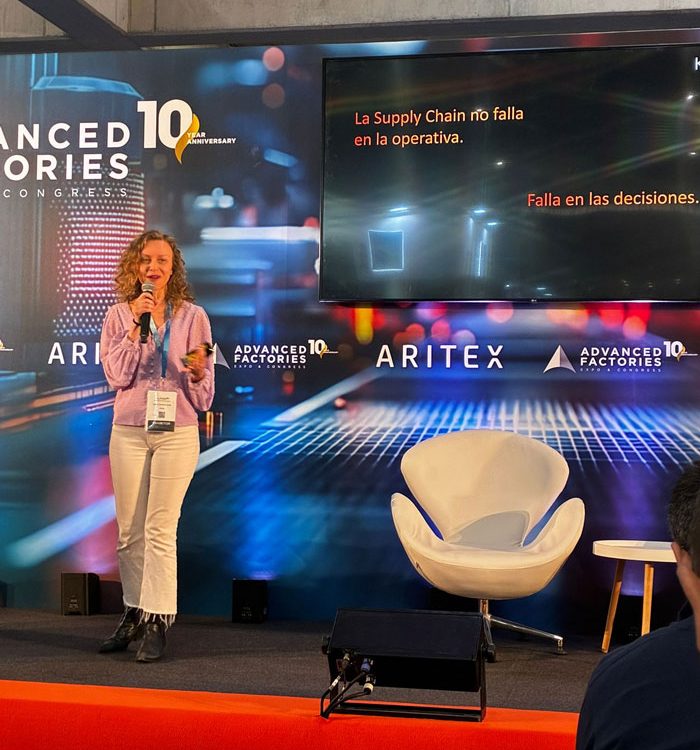
And that idea became the foundation of much of our talk at the Industry 4.0 Congress.
From Chasing Data to Making Decisions
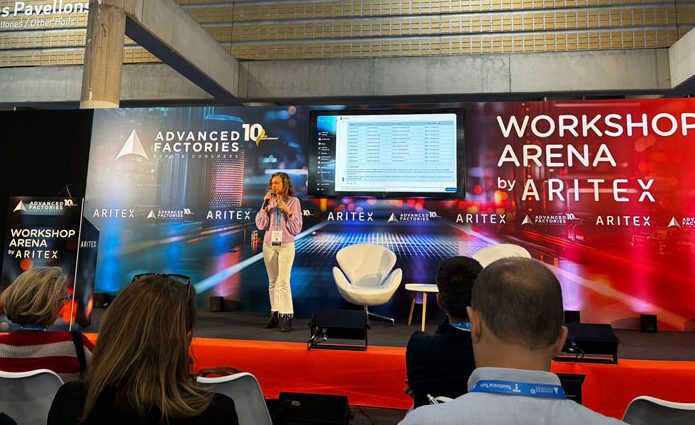
During our session at the event, we discussed something we encounter almost every week when working with large industrial companies: teams spend too much time searching for information and too little time making decisions.
ERPs, transportation platforms, emails, Excel files, departmental tools, supplier portals, disconnected systems…
Most organizations are already digitalized to some extent. The problem is that information remains fragmented.
And that has a very direct impact on daily operations.
A seemingly simple question like, “Where is this order?” can require checking multiple systems, reviewing emails, validating transport statuses, or manually cross-referencing information.
Over time, this dynamic creates what we described during the talk as “operational infoxication”: too much data, too many alerts, and too many channels competing for the team’s attention.
In that context, reacting quickly becomes increasingly difficult.
Exception Management: Shifting the Focus
One of the concepts that sparked the most interest during the event was exception management.
The idea is simple: instead of trying to monitor absolutely everything, automatically identify what is deviating from the plan and requires attention.
It sounds obvious, but in practice many companies still operate under a reactive model:
- Reviewing endless lists.
- Manually chasing incidents.
- Checking orders one by one.
- Detecting problems only after they have already caused impact.
This is where predictive algorithms begin to change the rules of the game.
When a platform can combine production, inventory, procurement, transportation, and delivery performance data in real time, patterns begin to emerge.
And those patterns enable anticipation — not just understanding what happened, but detecting what is likely to happen next.
During conversations at our stand, we shared many real-world examples of companies that have gained visibility and responsiveness by connecting the following into a single environment:
- Production plans.
- Plant inventory.
- Supplier purchase orders.
- Goods in transit.
- Final customer delivery tracking.
Not because they need more dashboards, but because they need less friction when making decisions.
When Talking to Data Becomes Natural
Another topic that generated a lot of discussion at Advanced Factories was the role of generative AI in industrial environments.
Just a few years ago, it seemed difficult to imagine a supply chain manager interacting with operations through natural language.
Today, it is becoming a reality.
During the event, we demonstrated how users can directly ask:
- Which orders are at risk.
- Which supplier is generating the most incidents.
- What the impact of a delay will be.
- To automatically generate a structured report ready to share.
Without navigating across multiple tools.
Without building complex queries.
Without chasing data.
And perhaps that was one of the most interesting conclusions from these three days: AI does not replace operational expertise. It amplifies it.
It allows teams to spend less time gathering information and more time making impactful decisions.
Beyond Technology
Beyond demos, presentations, and meetings, Advanced Factories once again made one thing very clear: the industry is entering a different stage.
A stage where resilience, visibility, and the ability to anticipate are no longer competitive advantages, but basic requirements.
Today’s environment — strained supply chains, volatility, cost pressure, geopolitical uncertainty, and growing service expectations — requires companies to operate differently.
And that explains why concepts such as data integration, intelligent automation, and applied AI were so present throughout the entire event.
For us, what we take away most are the conversations.
Conversations with teams that want to move beyond reactive management.
With leaders looking to simplify complex operations.
And with companies that understand technology only makes sense when it helps people make better decisions.
We return from Barcelona with many ideas, new challenges, and the feeling that the industry is moving toward a far more connected, predictive, and decision-driven model.
And perhaps that is the real transformation we are experiencing.
It is not just about having more data. It is about stopping the chase for it.

- Which orders are at risk.
- Which supplier is generating the most incidents.
- What the impact of a delay will be.
- To automatically generate a structured report ready to share.