Types of Carriers in Logistics: The Complete Guide by Mode, Contract, and Cargo
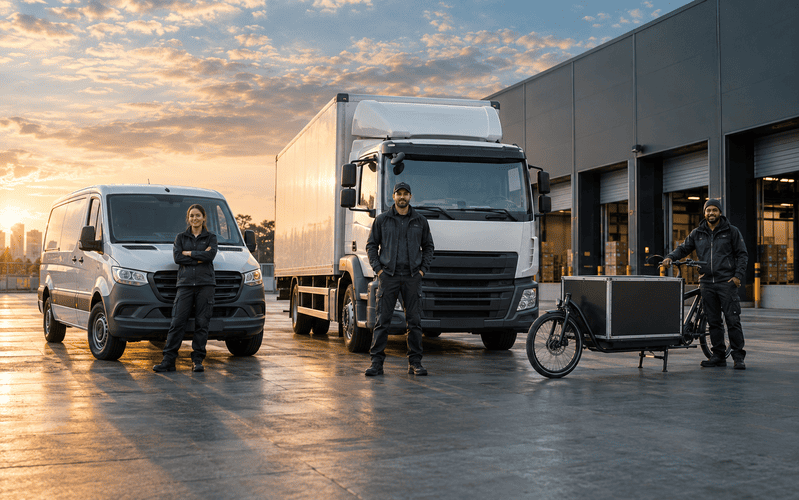
When a company needs to move goods from one point to another, the first decision isn’t which route to take, it’s which type of carrier to hire. Shipping a full container across continents is nothing like shipping one loose pallet across town, and working with a fleet dedicated exclusively to your brand is nothing like working with a carrier who splits its capacity across hundreds of clients. Picking the wrong type of carrier shows up as extra cost, missed deadlines, and goods that arrive in worse shape than expected. This guide covers what a carrier is, the main types that exist by transport mode, contract type, and cargo handled, how a carrier differs from other roles in the industry like a logistics provider or a freight forwarder, and how to pick the right type for the actual needs of a given shipment.
What Is a Carrier in Logistics?
A carrier is the person or company responsible for moving goods from an origin point to a destination, taking on legal and operational responsibility for that cargo while it’s in their custody. A carrier might operate trucks, ships, planes, or trains, with a fleet it owns or one it subcontracts, but in every case its function is the same: physically execute the transport, not just coordinate or sell it.
Carrier gets confused often with other roles that sit inside the supply chain. The carrier moves the freight, the freight forwarder brokers between the shipper and the carriers that actually do the moving, and a logistics provider manages a broader set of services that can include storage, distribution, and transportation all at once. Later in this guide we break these differences down in detail, because they directly affect who’s legally on the hook if something goes wrong in transit.
Types of Carriers by Transport Mode
The first major way to classify carriers is by the physical means they use to move goods. That choice isn’t just about distance or cost, it also determines what documentation is needed, what timelines are realistic, and what kind of cargo can actually be moved. These are the five main modes you’ll run into in any logistics operation.
Road or Trucking Carrier
This is the most widely used mode for domestic and regional distribution, especially for short and medium distances. A trucking carrier works with vehicles ranging from last mile vans to full articulated trailers, and its biggest advantage is flexibility. It can pick up and deliver door to door without depending on an intermediate port or airport the way other types of carrier do, which makes it the default option for most shipments within a single country or between neighboring ones.
The main limitation of a road carrier is capacity and reach. A truck can’t compete on volume with a ship or on speed with a plane, and past a certain intercontinental distance it stops being viable on time and cost. It’s also subject to traffic restrictions, mandatory driver rest hours, and axle weight regulations that vary from country to country, factors an experienced carrier knows how to plan around, but that can still cause delays when they’re not managed well.
Ocean Carrier
Ocean freight moves the bulk of international trade because of its sheer capacity and low cost per unit, especially in full containers (FCL) or shared containers (LCL). An ocean carrier operates vessels that can take weeks to complete a route, which makes it a good fit for cargo that carries volume but not urgency, raw materials, consumer electronics, industrial components, or any freight where cost per kilo matters more than speed.
The trade off is transit time and dependency on port infrastructure. A delay at an origin or destination port, seasonal congestion, or a customs issue can add days or weeks to the expected timeline, and unlike trucking, there’s no easy way to route around the problem. That’s why ocean shipments are usually planned with wide safety margins, something any company that relies on this mode needs to build into its inventory planning.
Air Carrier
An air carrier is the option when urgency outweighs cost. It moves goods within hours or a few days across continents, making it the natural choice for high value shipments, perishable goods, critical spare parts that would otherwise stop a production line, or ecommerce orders with tight delivery promises.
That level of speed comes with a cost per kilo far higher than any other mode, and it imposes weight and volume limits that ocean freight simply doesn’t have. Air carriers are also more exposed to specific restrictions, hazardous materials, lithium batteries, or products under particular health regulations, all of which require extra documentation and sometimes prior approval. In practice, almost no company moves its entire volume by air, it’s reserved for the slice of shipments where speed justifies the premium.
Rail Carrier
Rail freight blends some of the advantages of ocean and road. It moves large volumes at a competitive cost per mile, with a smaller carbon footprint than trucking over the same distance, and less exposure to road traffic congestion. It’s especially efficient on corridors with established infrastructure, bulk cargo, containers on transcontinental routes, or heavy industrial goods.
Its main limitation is the rigidity of the network. A rail carrier can only deliver where tracks and terminals exist, which almost always requires pairing it with a final trucking leg to reach the actual destination, an operation known as intermodal transport. That adds a layer of coordination, since two different carriers are involved and the handoff between them needs to be managed carefully to avoid bottlenecks.
Intermodal Carrier
An intermodal carrier isn’t tied to a single mode, it combines two or more under one contract and a single point of responsibility from start to finish. A shipment might leave by ship, reach a port, continue by rail to an inland logistics hub, and finish its journey by truck to the final destination, all managed by one carrier that takes on full responsibility for the entire route, instead of the client having to book and coordinate each leg separately.
The main advantage of an intermodal carrier is that it simplifies management and spreads the risk. If an ocean leg gets delayed, the same carrier can reorganize the trucking leg to limit the impact on the final delivery date. The complexity shifts from the client to the carrier, which needs agreements and capacity across several modes at once, something only operators of a certain size can reliably offer.
Types of Carriers by Contract or Business Relationship
Beyond the transport mode, carriers are also classified by the kind of business relationship they have with their clients. This matters because it determines how much availability, priority, and customization a company can expect from its carrier, and also who takes on what level of responsibility when something goes wrong.
Common Carrier
A common carrier offers its services to any business or individual willing to pay, with no exclusivity, under published rates and general terms. It’s the most typical model in parcel and courier services, and also across a large share of general freight trucking, where the same truck can carry cargo from several different clients on a single route.
The advantage of a common carrier is availability and price. Because capacity is spread across many clients, fixed costs get diluted and rates tend to be more competitive than an exclusive service. The trade off is lower priority during periods of high demand, like seasonal peaks, and less room to tailor the service to one client’s very specific needs.
Contract Carrier
A contract carrier works under a specific agreement with one or a handful of clients, setting rates, timelines, minimum volumes, and service conditions for a defined period. Unlike a common carrier, it doesn’t offer its services openly to the market, it negotiates custom terms with each client it signs.
This model gives the contracting company more predictability, it knows in advance what capacity it has locked in and at what price, which matters a lot when shipping volume is high and steady. In exchange, it usually requires minimum volume commitments from the client, and gives up the flexibility of shopping around for the lowest rate on every single shipment.
Private Carrier
A private carrier doesn’t serve third parties, it moves exclusively the goods of the company that owns the fleet. This is common in industries where total control over transport is critical, fresh food distribution with an in house cold chain, manufacturers that deliver directly to their own retail points, or companies where the vehicle’s branding is part of the customer experience.
The advantage of a private carrier is full control over schedules, driver training, and service standards, with no dependency on a third party’s availability. The cost is the other side of that coin, running an owned fleet means vehicles, staff, maintenance, and route management as a permanent cost center, rather than a variable expense that only gets paid when there’s something to ship.
Dedicated Carrier
A dedicated carrier sits between common and private. It’s an outside company, but it assigns trucks, drivers, and schedules exclusively to a single client or a small group of clients, without sharing that capacity with anyone else. The contracting company gets much of the control and availability of an owned fleet, without taking on the investment or the direct management of staff and vehicles.
This model works especially well for companies with recurring routes and predictable volume, where it makes sense to reserve fixed capacity, but that don’t want or can’t justify building an owned fleet. A dedicated carrier tends to know the routes, delivery points, and client quirks in depth, which cuts down on issues compared to a common carrier that serves a different client on every route.
Types of Carriers by Cargo Handled
The third relevant classification is about what the carrier moves and how, not the mode or the contract type. This distinction directly affects the type of vehicle used, how the route gets planned, and, in the case of specialized cargo, the training and licensing a driver needs.
Full Truckload (FTL) Carrier
In FTL shipping, the truck is dedicated exclusively to one client’s freight, which fills all or nearly all of the available space. The vehicle leaves origin and goes straight to destination, with no intermediate stops to pick up or drop off freight for other clients.
This makes the FTL carrier the fastest and most secure option for large volumes, since the freight isn’t handled or reorganized mid route, which cuts the risk of damage and errors. Cost per unit shipped tends to be lower than LTL once volume is enough to fill the truck, though it only makes economic sense past a certain threshold. If the truck isn’t full, the client is still paying for the empty space.
Less Than Truckload (LTL) Carrier
LTL shipping combines freight from several different clients in the same vehicle, and each one pays only for the space and weight it actually uses. It’s the natural choice when a shipment’s volume doesn’t justify booking an entire truck.
The LTL carrier’s cost advantage is clear for small and mid sized shipments, but it comes with more handling. Freight gets loaded and unloaded at multiple points, sometimes routed through an intermediate consolidation hub, which extends transit time and raises the risk of issues compared to FTL. A well run LTL carrier minimizes that risk with careful handling processes and clear tracking down to the individual piece, but the shared nature of the vehicle means the margin for error is structurally higher.
Specialized Cargo Carrier
Some carriers focus on cargo that can’t move with a standard truck or a standard process. Refrigerated transport needs vehicles with constant temperature control for fresh food, pharmaceuticals, or flowers, and a break in the cold chain can ruin an entire shipment within hours. Hazardous materials transport requires drivers with current hazmat certification, specific documentation, and vehicles approved for each substance class, from flammable goods to corrosive materials. And oversized cargo, industrial machinery, wind turbine blades, prefabricated structures, needs special permits, escorts, and often routes planned weeks in advance to avoid bridges, tunnels, or crossings the vehicle simply can’t clear.
Hiring a specialized carrier instead of a generic one isn’t a matter of preference in most of these cases, it’s a legal and operational requirement. A carrier without hazmat certification simply can’t legally move certain dangerous goods, and one without oversized load experience can accept a route that later turns out to be unworkable because of a height restriction nobody caught in time.
Carrier vs. Logistics Provider vs. Freight Forwarder: What’s the Difference
These three terms get used interchangeably all the time, but they cover different functions inside the supply chain, and mixing them up has real consequences, especially when it comes to knowing who’s legally responsible if something goes wrong during a shipment.
Carrier vs. Logistics Provider (3PL)
A carrier’s job is limited to physically moving goods from one point to another. A logistics provider, by contrast, manages a wider set of services that can include warehousing, inventory management, order fulfillment, last mile distribution, and, in many cases, booking the actual transport on the client’s behalf. A logistics provider can own its own fleet and act as a carrier too, or it can subcontract transport to third parties while it handles the rest of the chain.
The difference matters when it comes to what’s actually being signed. With a carrier, the client is booking one specific route. With a logistics provider, the client is usually outsourcing a much larger slice of its supply chain, and the provider takes on coordinating multiple vendors, including different carriers depending on the leg or the type of shipment.
Carrier vs. Freight Forwarder
A freight forwarder doesn’t move freight directly. It acts as an intermediary between the client who needs something shipped and the carriers that actually execute that transport, often combining several modes and several different carriers within one international shipment. Its value comes from market knowledge, negotiating rates across multiple carriers, and managing complex customs paperwork.
This has a real practical implication for legal liability. Book directly with a carrier, and that carrier is responsible for the goods while they’re in its custody. Book through a freight forwarder, and depending on the type of agreement signed, the forwarder may act purely as an intermediary without taking on that direct liability, something worth clarifying before signing, especially for high value shipments.
- Carrier. Physically executes the transport and is directly liable for the goods while they’re in its custody.
- Logistics provider (3PL). Manages an integrated service that can include warehousing, inventory, and transport, and is liable according to what’s agreed in the client contract.
- Freight forwarder. Brokers between the client and the carriers, handles documentation and rates, and its direct liability for the goods depends on the type of agreement signed.
How to Choose the Right Type of Carrier for Your Shipment
There’s no single ideal carrier for every shipment, the right choice depends on the concrete characteristics of what you’re moving and on your business priorities for that particular shipment. These are the factors that should carry the most weight in that decision.
- Urgency. When the deadline is critical, air freight or a dedicated carrier running fixed routes usually justifies its higher cost.
- Shipment volume. A shipment that fills a truck fits an FTL carrier, a smaller one fits an LTL or parcel carrier better.
- Type of goods. Refrigerated, hazardous, or oversized goods need a specialized carrier with the right certification, not a generic one.
- Frequency and recurrence. Fixed routes and predictable volume fit well with a dedicated or contract carrier, one off shipments fit better with a common carrier.
- Available budget. A common carrier tends to be the cheapest option, a private or dedicated fleet only makes economic sense with enough volume to justify the exclusivity.
- Geographic reach. An international shipment almost always combines several modes and may need an intermodal carrier or a freight forwarder to coordinate the whole chain.
Frequently Asked Questions About Types of Carriers
These are the questions procurement and operations teams ask most often when choosing between the different types of carriers, beyond the general classification already covered above.
What’s the difference between a carrier and a trucking company?
A trucking company is a carrier, specifically one that operates by road. Carrier is the broader term that covers any company moving freight by any mode, truck, ship, plane, or rail, while trucking company refers specifically to the road segment of that industry.
Which type of carrier is the cheapest?
A common carrier usually offers the most competitive rates because it spreads its fixed costs across many different clients. A dedicated carrier or a private fleet only becomes cheaper once shipping volume is high enough to justify the exclusivity.
Can a carrier also act as a logistics provider?
Yes, it’s common for a carrier with its own fleet to expand into warehousing and inventory management, effectively becoming a logistics provider. The difference is in the scope of the service being contracted in each case, not in whether a single company can play both roles.
What documentation does a hazardous materials carrier need?
It needs drivers with current hazmat certification, a vehicle approved for the specific substance class being transported, and the shipping documentation required by regulation, which varies depending on the type of hazardous material.
How do you know if a carrier is reliable before hiring them?
Check their track record on incidents, confirm they hold the insurance and licenses needed for the type of cargo you plan to ship, and ask for references from other clients with shipments similar to yours. A good extra signal is how they document delivery, a reliable carrier can always produce clear, traceable proof of delivery.