How AI Is Transforming the Way Food Supply Chains Are Managed
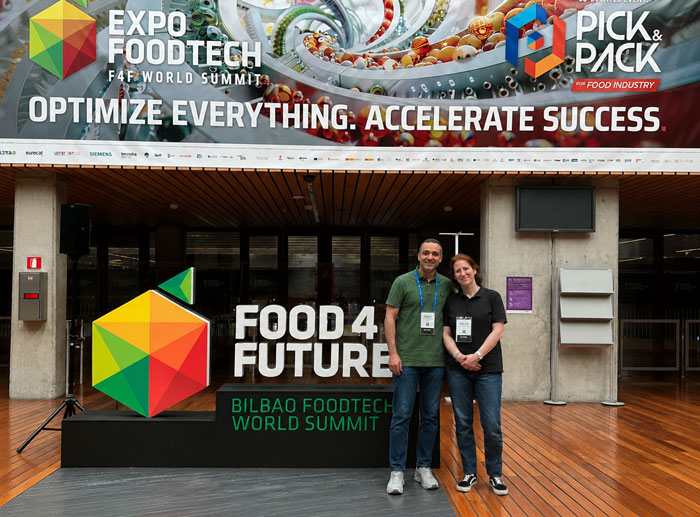
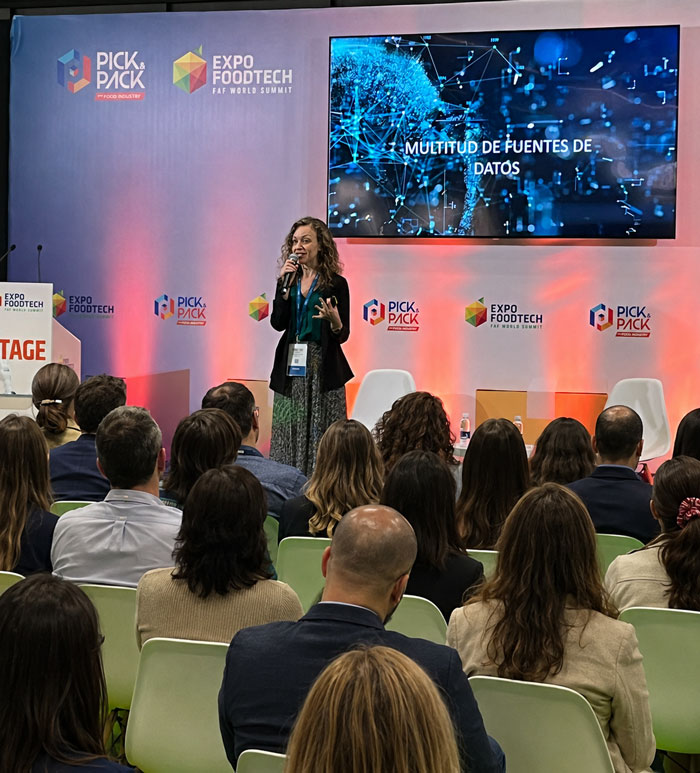
Last week, we took part in a new edition of ExpoFoodTech in Bilbao, one of the most important events for the food and technology industries in Spain. This year, in addition to having our own exhibition space, we had the opportunity to share our vision and expertise through a presentation led by Juncal Sainz de Vicuña, Chief Commercial Officer at Kaira Digital.
The central message of the presentation was clear: artificial intelligence is already transforming the supply chain, and the real shift is not just about automating processes, but about enabling teams to stop chasing data and focus on making decisions.
After several days of conversations with operations, logistics, and supply chain leaders from the food industry, one conclusion became evident: pressure on supply chains has never been higher, but neither has the technological capability to manage that pressure more effectively.
The Food Industry’s Biggest Challenge: Making Faster Decisions in Increasingly Complex Environments
The food industry operates in an environment of particularly high complexity:
- Perishable products
- Constantly changing demand forecasts
- Unstable logistics costs
- Margin pressure
- Regulatory requirements
- Customers who expect maximum availability and traceability
Adding to this is a challenge that was repeatedly mentioned throughout the event: many teams still spend too much time searching for information scattered across multiple systems.
ERPs, planning tools, emails, spreadsheets, logistics platforms, transportation data, and operational incident reports generate enormous volumes of information. However, many companies still struggle to turn that data into fast, actionable decisions.
And in the food industry, every minute counts.
AI in the Supply Chain Is No Longer Experimental
One of the most recurring messages at ExpoFoodTech was that AI has moved beyond being a future innovation and has become a practical operational tool.
The most advanced companies are already using artificial intelligence to:
- Anticipate disruptions
- Detect deviations before they impact customers
- Improve forecasting accuracy
- Optimize inventory levels
- Automate alerts
- Reduce operational analysis time
The most significant transformation is not purely technological—it is operational.
Teams need to spend less time gathering information and more time interpreting scenarios, prioritizing actions, and making decisions.
During our presentation, we shared this evolution: moving from reactive models—where issues are discovered too late—to predictive models, where information reaches users in the right context and in real time.
Smart Alerts: From Reacting to Anticipating
One of the most common topics discussed at our booth was incident management.
Many supply chain directors shared similar concerns:
- Delays detected too late
- Lack of end-to-end visibility
- Difficulty prioritizing risks
- Excessive reliance on manual monitoring
This is where AI delivers one of its greatest benefits: the ability to identify patterns and generate intelligent alerts before a problem escalates.
It is not just about displaying data on a dashboard. It is about receiving useful, actionable information:
- Which shipment is at risk
- Which supplier is generating the most deviations
- Which route presents recurring incidents
- Where a stockout may occur
The objective is simple: reduce uncertainty and accelerate response times.
Conversing with the Supply Chain: The Next Step
Another topic that generated significant interest was the use of generative AI in operations.
More and more companies are looking to democratize access to information, enabling any user to query complex data using natural language.
Questions such as:
- “Which orders are at risk of delay this week?”
- “Which distribution centers are experiencing the most incidents?”
- “Which carrier is underperforming on OTIF?”
- “Which products face the highest stockout risk?”
can be answered in seconds through conversational assistants connected directly to operational data.
This reduces technical dependency, speeds up analysis, and ensures information reaches decision-makers at the right time.
An Industry Ready to Evolve
ExpoFoodTech also left us with a very positive impression: the food industry is ready to accelerate its digital transformation.
The conversation is no longer focused solely on digitizing processes, but on how to make better use of data to improve efficiency, resilience, and the ability to anticipate challenges.
And artificial intelligence will play a decisive role in that transformation over the coming years.
At Kaira Digital, we return from Bilbao with many valuable conversations, new shared challenges, and one clear idea: companies that succeed in turning data into faster decisions will gain a significant competitive advantage in the supply chain of the future.
Thank you to all the professionals who visited our booth and shared their time with us during the event. Together, we continue building smarter, more visible, and more efficient supply chains.

- "Which orders are at risk of delay this week?”
- “Which distribution centers are experiencing the most incidents?”
- “Which carrier is underperforming on OTIF?”
- “Which products face the highest stockout risk?”