Product Traceability: What It Is and How It Impacts Your Supply Chain
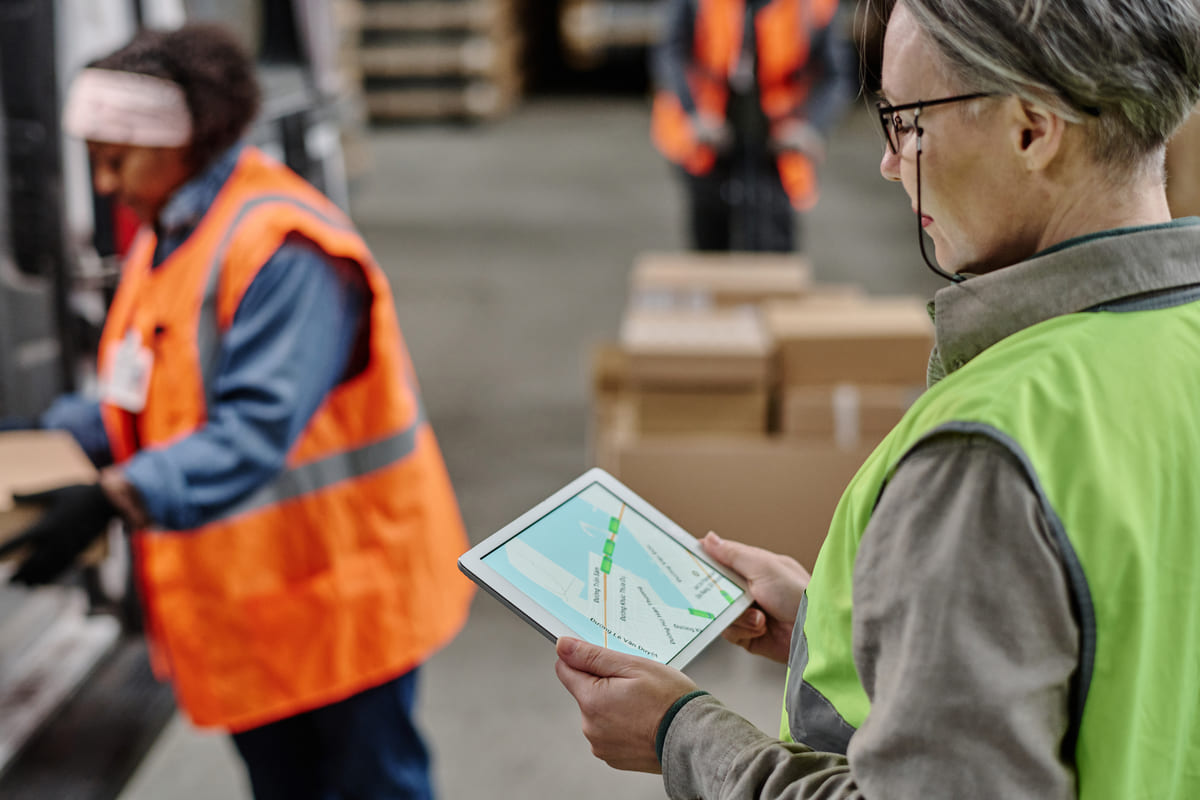
In an increasingly complex and demanding logistics environment, knowing where a product is at any given moment is no longer enough. Companies need to know the complete journey that product has followed: where it comes from, what processes it has gone through, who has handled it and where it is heading. That complete tracking capability is what is known as product traceability, and it has become one of the fundamental pillars of an efficient, safe and competitive supply chain.
Implementing a solid traceability system not only improves internal operational control, but also strengthens trust with customers and suppliers, reduces the risk of costly errors and facilitates compliance with increasingly strict regulations.
What is product traceability
Product traceability is the ability to identify, record and track the journey of a product throughout its entire supply chain, from the sourcing of raw materials to its delivery to the end customer. It involves having access to precise information about the origin of the product, the processes it has gone through, the conditions in which it has been stored or transported, and the parties involved at each stage.
Unlike simple stock control, traceability goes far beyond inventory. It is not only about knowing how many units are available, but about being able to answer precisely questions such as: which batch does this item come from? In what conditions did it arrive at the warehouse? What route has it followed to the delivery point? That complete visibility is what allows companies to act quickly in the event of any incident and make decisions based on real data.
Why traceability is important in the supply chain
The absence of traceability has direct and tangible consequences for companies. When there is no clear record of a product’s journey, errors are detected late, problems are amplified and the capacity to react is drastically reduced. A defective batch that cannot be traced may reach the end customer. A supply delay may go unnoticed until it has already caused a stockout. A quality incident may spread to an entire product family before being identified.
Beyond incident management, traceability adds value in day-to-day operations. It makes it possible to optimise processes, identify bottlenecks, improve planning and ensure that every actor in the supply chain has the information they need at the right time. In sectors where product safety is critical, such as food or pharmaceuticals, traceability is not an option but an obligation.
In short, a supply chain without traceability is a chain that operates with incomplete information, and that always has a cost: in efficiency, in quality and in trust.
Types of traceability
There is no single traceability model. Depending on the point in the supply chain to be controlled and the type of information to be recorded, three main types can be distinguished.
Upstream traceability
Upstream traceability, also called backward traceability, focuses on the origin of the product. Its objective is to identify where each item comes from: which supplier provided it, in what conditions it arrived, which batch it belongs to and what raw materials or components it contains. This type of traceability is particularly relevant in sectors such as food, where knowing the origin of ingredients is a legal requirement, but also in any industry where product quality depends directly on the quality of the raw materials received.
Internal traceability
Internal traceability refers to the tracking of the product within the organisation itself. It records all the movements, transformations and processes the item goes through from the moment it enters the facilities until it leaves them. It includes information on storage, handling, manufacturing or assembly processes, and order preparation. It is the type of traceability that has the greatest impact on operational efficiency, as it makes it possible to identify at which stage of the internal process errors or inefficiencies occur.
Downstream traceability
Downstream traceability, or forward traceability, deals with the destination of the product. It records to whom each item has been delivered, in what quantity, on what date and through which channel. In the event that a product recall is necessary or a customer complaint needs to be handled, this type of traceability allows action to be taken quickly and precisely, minimising the impact on operations and on the company’s reputation.
How to implement a traceability system
Implementing an effective traceability system requires planning, technology and a clear vision of the processes to be controlled. It is not about applying a generic solution, but about designing a model adapted to the characteristics of each supply chain.
Product identification and labelling
The first step in ensuring traceability is to assign each product or batch a unique identifier that allows it to be tracked throughout the entire chain. This identifier can take the form of a barcode, a QR code, an RFID tag or another medium, depending on operational needs and the level of automation available. What matters is that the identifier is consistent, readable at all points in the chain and linked to a complete and up-to-date data record.
Recording and tracking movements
Once the product has been identified, every movement it makes must be recorded: entry into the warehouse, change of location, transfer to production, dispatch to the customer. That record must be systematic, accurate and, as far as possible, automated to avoid human error. The more complete the movement history, the greater the company’s ability to detect problems, audit processes and respond quickly to any incident.
Systems integration
Traceability cannot function in isolation. For it to be truly effective, the systems that manage inventory, orders, transport and relationships with suppliers and customers must be connected to each other. Integration between the ERP, the WMS and other digital supply chain platforms is what makes it possible to have a unified view of the product’s journey, without information silos or blind spots. Without that integration, traceability becomes fragmented and loses much of its value.
Key technologies for product traceability
Technology is the foundation on which any modern traceability system is built. In recent years, technological advances have significantly expanded the possibilities for tracking and recording, enabling levels of precision and automation that were previously unthinkable.
Barcodes and QR codes
Barcodes and QR codes remain the most widely used identification technologies in the supply chain. They are cost-effective, easy to implement and compatible with most existing management systems. Their main limitation is that they require direct line-of-sight reading, which makes them less efficient in high-speed environments or when the volume of references is very high.
RFID
RFID technology makes it possible to identify and track products without the need for visual contact, using radio waves. Its great advantage over barcodes is the ability to read multiple tags simultaneously and at a distance, which considerably speeds up receiving, inventory and dispatch operations. Although its initial implementation cost is higher, the return in terms of efficiency and accuracy justifies it in operations of a certain scale.
Digital supply chain platforms
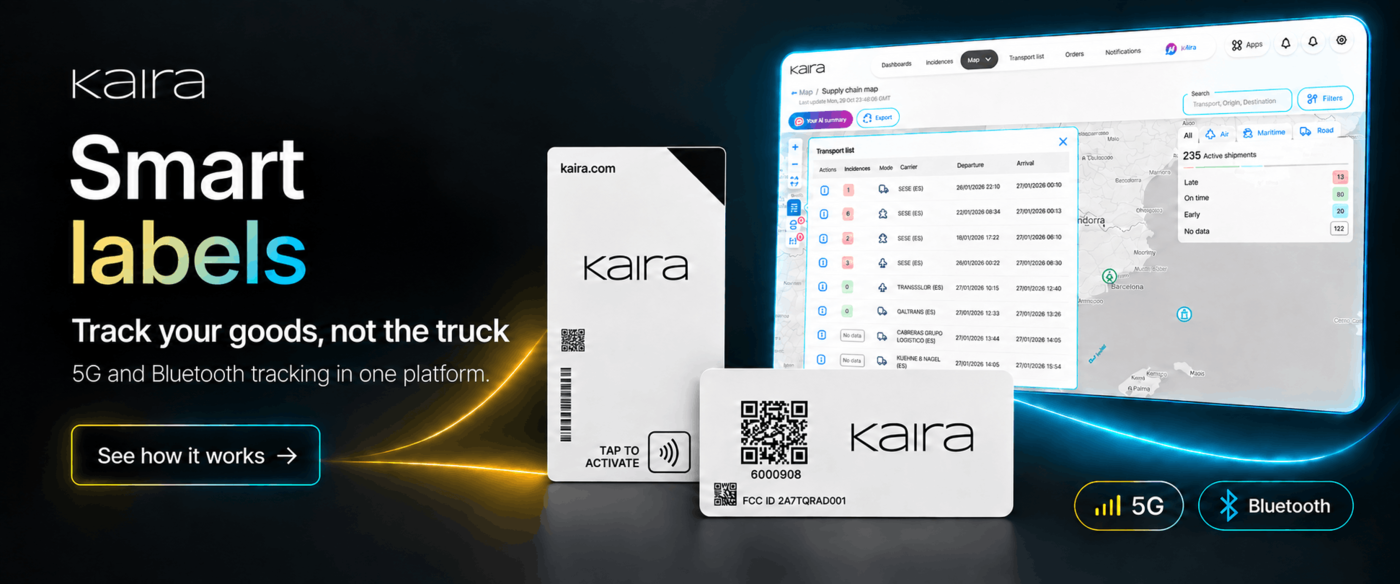
Beyond identification technologies, modern traceability relies on digital platforms capable of centralising, processing and visualising all supply chain information in real time. These platforms connect all actors in the chain, from suppliers to customers, and provide a complete and up-to-date view of the status of each product at any given moment. They are the core on which truly effective and scalable traceability is built.
Traceability and regulation
In certain sectors, product traceability is not just a good operational practice but a legal obligation. The food sector is the clearest example: European Regulation 178/2002 establishes traceability as a fundamental requirement for ensuring food safety at all stages of the supply chain. The pharmaceutical industry also has specific regulatory frameworks that require manufacturers and distributors to maintain detailed records of the origin, status and destination of each medicine.
Beyond these sector-specific regulations, international standards such as ISO 9001 incorporate traceability as part of quality management systems, recognising its role in product identification and status control. For companies operating in international markets, complying with these standards is not only an obligation but also a competitive advantage that strengthens trust with customers and business partners.
Real-time traceability: the next level
Traditional traceability has long operated reactively: records were consulted when a problem arose, and the information available was often incomplete or outdated. The real qualitative leap occurs when traceability becomes proactive, based on real-time data that allows problems to be anticipated before they occur.
A connected digital platform that integrates all actors in the supply chain makes it possible to monitor the status of each product at any given moment, detect deviations immediately and trigger automatic responses to any incident. That real-time responsiveness not only reduces the impact of problems, but also allows the operation to be continuously optimised: adjusting routes, reorganising inventories, anticipating replenishment needs or identifying inefficiencies before they become costs.
In an environment where speed and precision are decisive competitive factors, real-time traceability ceases to be an added value and becomes a strategic necessity.
Conclusion
Product traceability is much more than a tracking system. It is the foundation on which a transparent, efficient and resilient supply chain is built. Knowing the complete journey of each product, from its origin to its final destination, allows companies to operate with greater confidence, reduce errors, comply with current regulations and respond swiftly to any change or incident.
As supply chains become more global and complex, real-time traceability, supported by technology and integrated digital platforms, becomes one of the most valuable assets a company can develop. It is not just about knowing where a product is, but about having complete control over every step it takes throughout its lifecycle.