The challenge of supply chain visibility and how to solve it

In the current context, the challenge of solving supply chain visibility is a central concern for any company that aspires to efficient logistics. Having accurate information about the location, status, and arrival date of products is essential for optimising the supply chain. However, many organisations still manage this data through disparate systems, spreadsheets and internal messaging channels, resulting in fragmented visibility. This lack of integration can become a serious obstacle to the supply chain, especially in an environment characterised by unpredictable demands and global risks.
From delayed reports to real-time visibility
Just a few years ago, logistics managers were content with retrospective analyses: “What happened last week at such-and-such port?” “How did supplier X’s delay affect our production?” Today, this reactive approach is becoming obsolete. Cloud platforms and IoT devices have democratised access to real-time data: temperature sensors in containers, geofences that record every entry and exit from a warehouse, or telemetry that shows the exact pace of transport. However, collecting tens of thousands of data points is useless if we cannot transform them into actionable information.
Artificial intelligence: the data translator
This is where artificial intelligence, and in particular generative AI, plays a decisive role. Imagine a system that automatically reads a truck’s logs, combines that information with the weather forecast, and alerts you in advance of a possible storm that could delay its journey on the road. Turning complex data into clear narratives is the great promise that AI is already beginning to fulfil.
Breaking down barriers: unified data
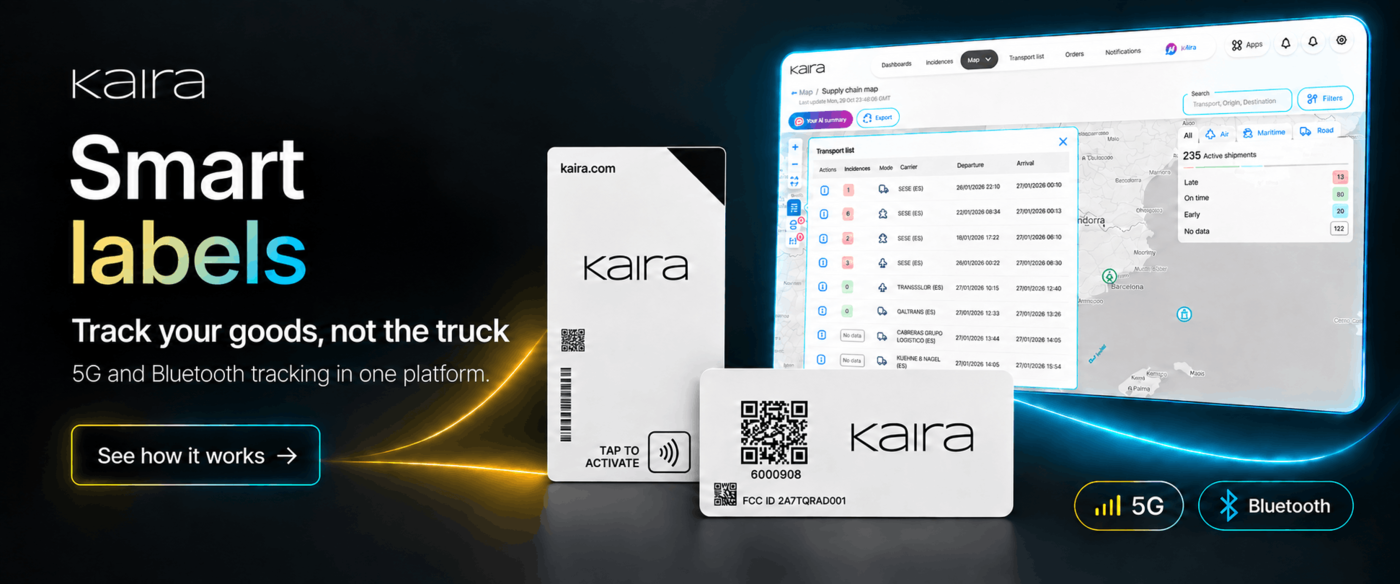
But technology only has value when data from across the entire supply chain – from the supplier of raw materials to the last mile – flows into a single repository. Integrating ERPs, TMS, WMS and third-party systems using open APIs or industry standards eliminates the silos that have hampered collaboration between departments and with external partners for decades. The result is a truly holistic “dashboard” where every alert, every exception and every KPI is interconnected.
The future: autonomous visibility
The next generation of visibility solutions will go beyond alerting: they will anticipate. Thanks to predictive models that continuously learn from historical and real-time data, companies will be able to simulate “what if” scenarios at high speed, assessing the impact of a port strike or a seasonal peak in demand before it even happens.
A strategic asset
Today, those who master visibility gain a tangible competitive advantage: they reduce transport costs, minimise idle inventory and maintain accurate delivery promises. But above all, they gain resilience: the ability to recover more quickly from any disruption. At Kaira Digital, we are convinced that the supply chain of the future will be built on a foundation of visibility. Are you ready to make the leap from scattered data to a unified, predictive vision?
Kaira Digital will accompany you on that journey.
